
Raising baby chicks can seem overwhelming if you haven’t done it before. We dove right in and just had to share what we learned. Lets show you how to raise baby chicks in your home.
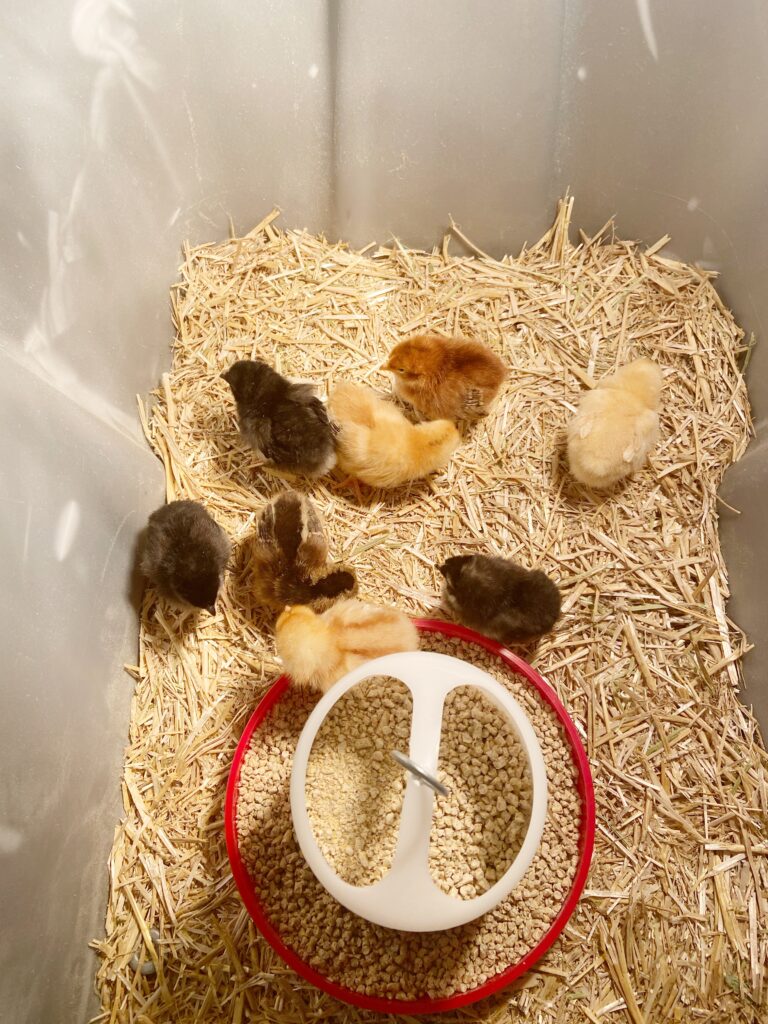
What kind of baby chicks are we talking about?
Lots of homesteads raise chickens, ducks, geese, guinea fowl, etc. but these 5 tips for raising baby chicks will apply to chickens. These tips may also go well with the other types of birds, but I don’t have experience (yet) with them, so for now we will focus on baby chickens.
How to choose your baby chicks…
Once we set our mind to turning this property into something that could sustain us, we knew that chickens were going to be a part of it. Our adventure started with 8 baby chicks of various breeds. It quickly grew to 17 baby chicks because, chicken math.
We get our chicks at the local farm supply store. Chicken breeds vary and not only do they look different, but their egg colors and sizes vary too. The breeds that we select are average size birds with good temperament to both warm and cold climates. We experience all of the seasons here, so this part is important. We currently have egg layers, meaning that our chickens are not currently used for meat purposes, but to provide us with eggs. One thing to keep in mind is that chicks are fairly fragile. Even through the best efforts, a chick may not always make it to maturity.
Remember:
- Pick breeds that do well in your climate
- Pick breeds that fulfill their purpose (meat, egg, or dual purpose)
- Have fun by adding breeds with fun egg colors
- blue, green, brown, white, tan, dark copper, etc.
- Pick the number of chicks you want, keeping in mind that you may lose some
Some of our favorite chicken breeds are Black Copper Maran, Easter Egger, Olive Egger, Ameraucana, Rhode Island Red, Plymouth Rock, and Black Jersey Giant

5 Helpful Tips to Raising Baby Chicks
- The brooder doesn’t have to be fancy. What works for us is to use a Rubbermaid tote like this one, a clamp on heat lamp, and some bedding.
- Baby chicks need access to water, but they can also easily drown. The solution that works for us is to use a few rocks (about 2 inches in diameter) placed in their water dish. If a chick happens to fall into the water, the rocks will help them to easily get out.
- Baby chicks can get overheated easily. Keeping the heat lamp at a safe distance above them is very important. Overheated chicks will lay down and move away from the heat lamp. Inactive chicks that are not under their heat source is a good sign that it’s too hot and the spacing needs adjusting.
- Handling baby chicks safely is important. They are fragile and if handled roughly, they will die or suffer injury. Cupping them in your hand works great and prevents them from falling.
- Chicks need to eat a starter food for at least 12 weeks. After 12 weeks the starter feed can be mixed with a layer feed.
- at around 16-17 weeks old the chicks can have adult feed.
- at or around 20 weeks of age the chicks will start laying eggs.

How to tell a hen from a rooster?
Chickens are usually sexed by the hatchery they are sold from. This is an invasive process that needs to be handled by someone trained. There is still a margin of error even when done professionally. It’s very possible to end up with both hens and roosters.
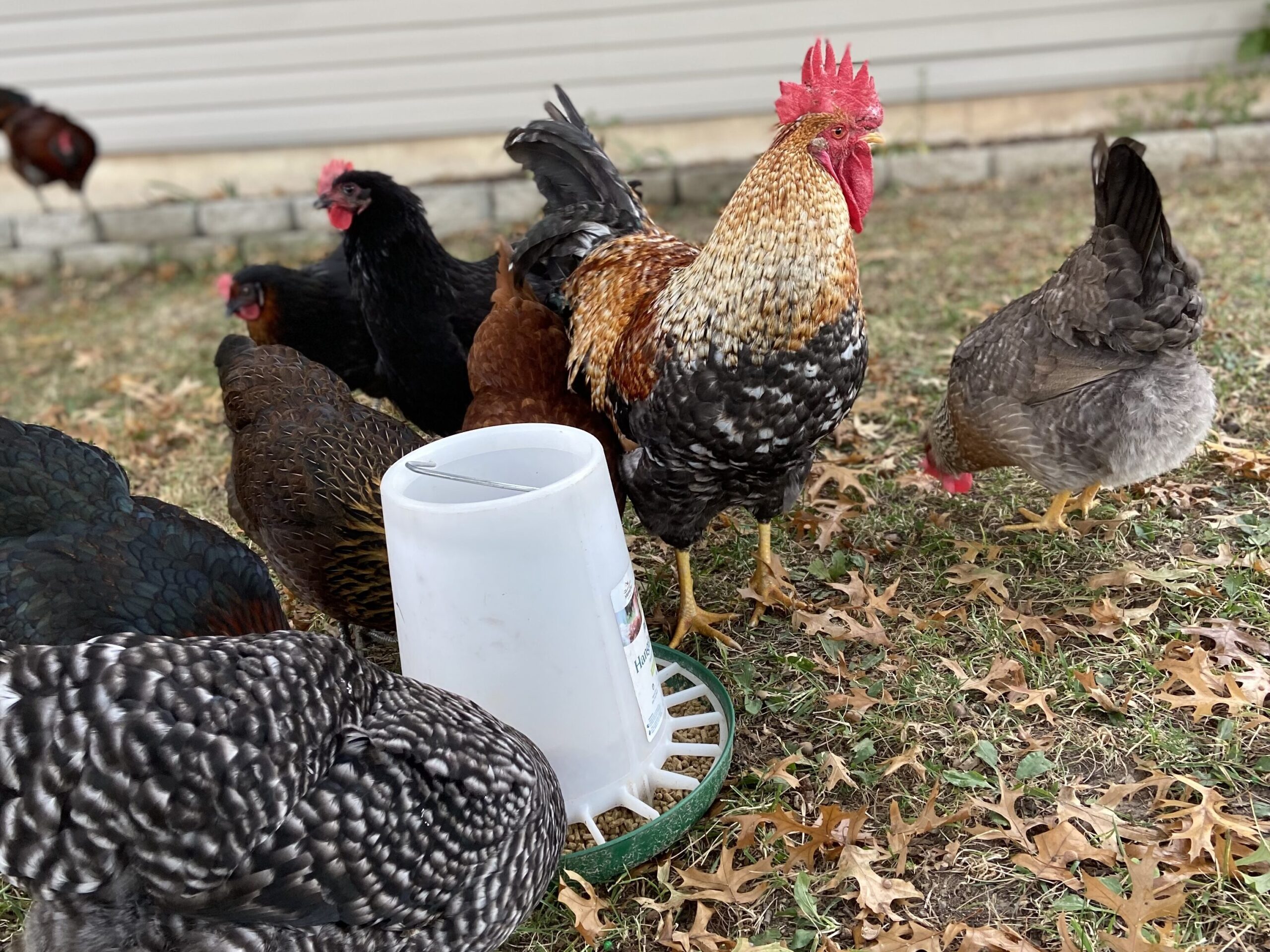
Rest assured, if you get a rooster or a few, they’re great to have around. They protect your hens and make it possible to breed your own flock.
Leave a Reply